
Oculoplasty & Ocular Oncology
Comprehensive eyelid, orbit, and tear duct surgery for functional and cosmetic eye restoration.
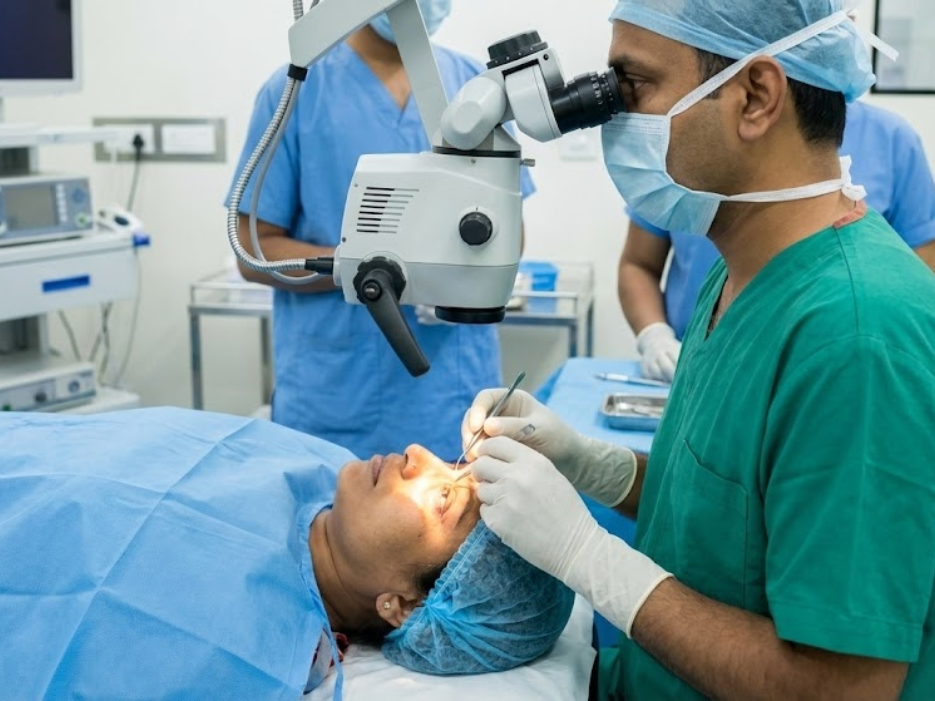
Advanced Oculoplastic Surgery
At Aryavart Eye Hospital, we specialize in oculoplastic surgery - a delicate subspecialty that combines ophthalmology with plastic surgery. Our expert oculoplastic surgeons perform reconstructive and cosmetic procedures around the eyes, including eyelid surgeries, orbital surgeries, tear duct procedures, and management of eye cancers.
Importance of Oculoplastic Surgery
Vision Protection
Corrects eyelid malpositions that expose and damage the cornea, preventing vision loss
Cancer Management
Early detection and surgical removal of eyelid and orbital tumors with margin control
Tear System Restoration
Repairs blocked tear ducts to eliminate chronic tearing and eye infections
Cosmetic Enhancement
Improves appearance and self-confidence by correcting age-related changes and trauma
Oculoplastic Procedures
Eyelid Reconstruction & Repair
Procedures to correct eyelid malpositions, trauma, tumors, and congenital abnormalities
Ptosis Repair
Corrects droopy eyelids that obstruct vision
Entropion/Ectropion Repair
Corrects inward/outward turning of eyelids
Eyelid Tumor Excision
Removal of benign and malignant eyelid tumors
Trauma Reconstruction
Reconstructs eyelids after accidents or injuries
Orbital & Socket Surgery
Surgeries involving the eye socket, orbital bones, and orbital contents
Orbital Decompression
For thyroid eye disease to relieve pressure
Orbital Tumor Removal
Surgical removal of orbital tumors
Socket Reconstruction
After eye removal (enucleation/evisceration)
Fracture Repair
Repairs orbital fractures from trauma
Lacrimal (Tear Duct) Surgery
Procedures to correct tear drainage system problems
DCR (Dacryocystorhinostomy)
Creates new tear drainage pathway
Lacrimal Stenting
Opens blocked tear ducts with stents
Canalicular Repair
Repairs damaged tear drainage canals
Congenital NLDO Repair
Corrects blocked tear ducts in infants
Cosmetic Oculoplasty
Aesthetic procedures to enhance appearance around the eyes
Blepharoplasty
Eyelid lift surgery for baggy eyelids
Brow Lift
Elevates drooping eyebrows
Fillers & Botox
Non-surgical facial rejuvenation
Scar Revision
Improves appearance of surgical scars
Conditions We Treat
Ptosis (Droopy Eyelids)
Eyelids that droop and obstruct vision, often requiring surgical correction
Entropion/Ectropion
Eyelids turning inward (entropion) or outward (ectropion) causing irritation
Dermatochalasis
Excess eyelid skin that obstructs vision and causes cosmetic concerns
Epiphora (Watery Eyes)
Excessive tearing due to blocked tear ducts requiring surgical repair
Orbital Fractures
Broken bones around the eye socket from trauma requiring reconstruction
Eyelid Tumors
Basal cell carcinoma, squamous cell carcinoma, melanoma, and benign growths
Advanced Surgical Techniques
Precision Under Microscope
Using operating microscopes for delicate tissue handling and precise suturing
Camera-Assisted Procedures
Using endoscopes for nasal and orbital surgery without external scars
Tissue Rearrangement
Advanced flap techniques for eyelid reconstruction after tumor removal
Advanced Technology We Use
High-Definition Endoscope
4K endoscope system for nasal and orbital surgery with superior visualization
Operating Microscope
Zeiss operating microscope with 40x magnification and integrated video system
High-Frequency Radio Surgery
Ellman radiosurgery system for precise cutting with minimal bleeding
3D CT/MRI Navigation
Image-guided navigation system for complex orbital and skull base surgery
Oculoplasty FAQs
Medically necessary procedures are covered:
• Ptosis repair (when vision is obstructed)
• Entropion/ectropion repair
• Eyelid tumor removal
• DCR surgery for blocked tear ducts
• Trauma reconstruction
• Orbital decompression for thyroid eye disease
Cosmetic procedures are usually not covered:
• Blepharoplasty for baggy eyelids (unless vision obstructed)
• Brow lift
• Cosmetic filler injections
• Botox for wrinkles
Always check with your insurance provider and our billing department for specific coverage details.
Initial recovery (1-2 weeks):
• Days 1-3: Maximum swelling and bruising, cold compresses recommended
• Day 5-7: Stitches removal (if non-absorbable)
• Day 7-10: Most bruising fades, can return to office work
• Avoid heavy lifting, bending, straining for 2 weeks
Intermediate recovery (3-6 weeks):
• Swelling continues to decrease
• Can resume most normal activities
• Scar begins to mature and fade
Final results (3-6 months):
• All swelling resolves
• Scars fade to near-invisible lines
• Final functional and cosmetic outcome visible
Most patients return to work within 7-14 days depending on the procedure.
General risks (common to all surgeries):
• Bleeding (hematoma) - 1-2%
• Infection - <1%
• Scarring - varies by individual
• Anesthesia risks
Specific oculoplasty risks:
• Asymmetry - 5-10% (may need minor revision)
• Over/under-correction - 5-10%
• Dry eyes - 10-20% (usually temporary)
• Eyelid malposition - 1-3%
• Vision changes - rare (<0.1%)
• Double vision - rare in orbital surgery
Risk reduction: Choosing an experienced oculoplastic surgeon, following pre/post-op instructions, and proper patient selection significantly reduce risks. Most complications are minor and correctable.
Yes, children often need oculoplastic surgery for:
• Congenital ptosis: Droopy eyelids present at birth that obstruct vision and cause amblyopia (lazy eye)
• Nasolacrimal duct obstruction: Blocked tear ducts causing chronic tearing and infections (95% resolve by age 1, surgery needed for persistent cases)
• Congenital eyelid malformations: Coloboma, epicanthal folds, telecanthus
• Orbital tumors: Dermoid cysts, capillary hemangiomas
• Craniofacial syndromes: Requiring multidisciplinary care
Special considerations for children:
• Usually performed under general anesthesia
• Timing is critical to prevent amblyopia
• Surgery may need adjustment as child grows
• Pediatric anesthesiologists involved
• Child-friendly pre-op preparation
Our pediatric oculoplastic specialists have extensive experience with children's eye surgery.
Upper eyelid surgery (upper blepharoplasty):
• Results typically last 5-7 years
• May last longer if performed at older age
• Some skin relaxation continues with aging
• Touch-up may be needed after 7-10 years
Lower eyelid surgery (lower blepharoplasty):
• Results are generally permanent for fat removal
• Skin may relax with aging
• Can last 10+ years
Ptosis repair:
• Usually permanent if corrected properly
• Recurrence possible in certain conditions (myasthenia gravis, CPEO)
Factors affecting longevity:
• Genetics and skin type
• Sun exposure and smoking
• Weight fluctuations
• Overall aging process
While oculoplasty turns back the clock, normal aging continues. Good skin care and sun protection help maintain results longer.